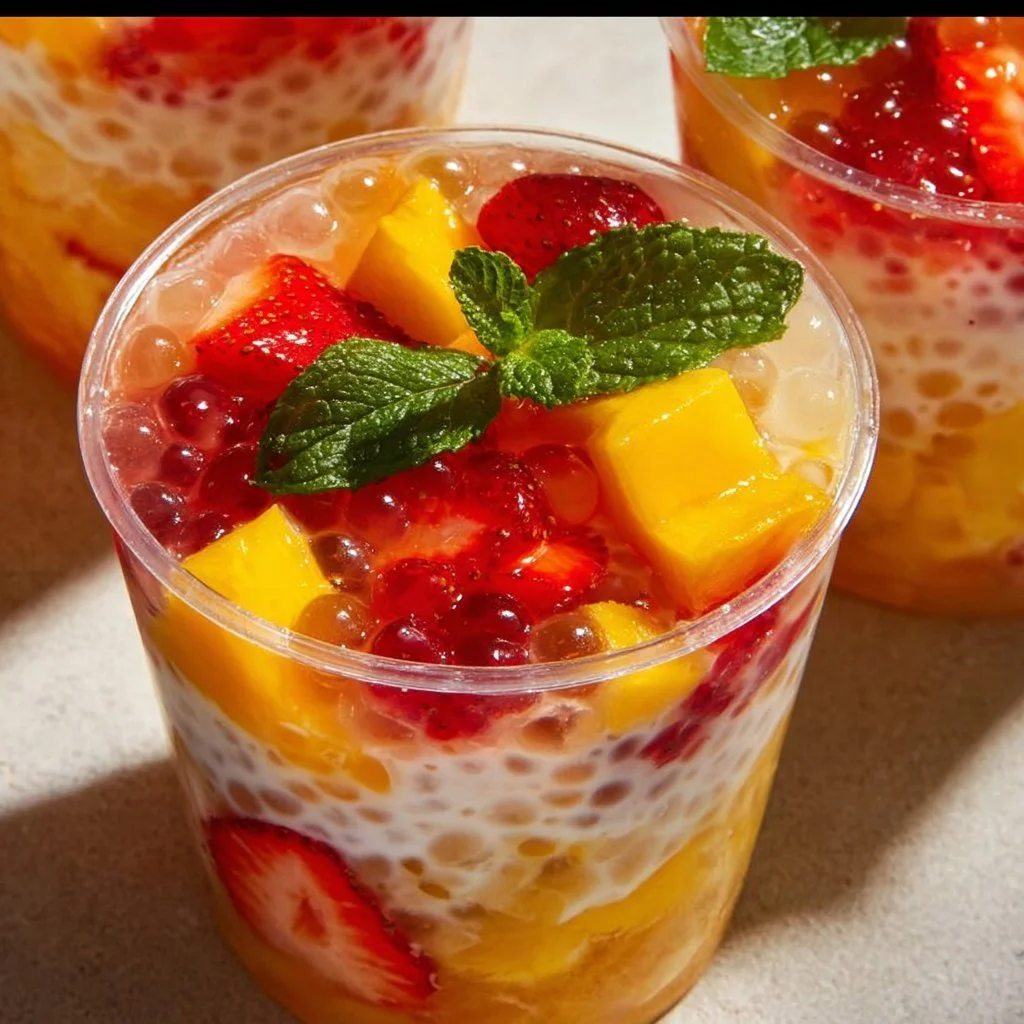
Strawberry Mango Sago
Why Make This Recipe
Strawberry Mango Sago is a delightful dessert that brings tropical flavors into a sweet, creamy dish. It’s a popular treat in many Asian cultures, celebrated for its refreshing taste and colorful presentation. Whether you’re looking to impress guests at a dinner party or simply want to indulge in something delicious at home, this dessert fits the bill perfectly. The combination of soft sago pearls, sweet fruit, creamy jelly, and smooth custard is not only satisfying to eat but also a feast for the eyes. Plus, it’s a great way to use fresh, seasonal fruits like strawberries and mangoes.
This recipe is perfect for families or gatherings as it is easy to prepare in larger quantities, ensuring that everyone gets a taste. It’s also versatile; you can modify the ingredients based on your preference. The blend of flavors and textures makes each bite enjoyable, whether you’re a kid or an adult.
How to Make Strawberry Mango Sago
Making Strawberry Mango Sago is a simple process that involves several steps, but the result is well worth it. Follow these directions closely to achieve the best results!
Ingredients
To make Strawberry Mango Sago, you will need:
- 2 cups milk
- 2 tablespoons strawberry custard powder or 1/2 cup strawberries blended into a puree + 2 tablespoons cornstarch
- 2-3 tablespoons sugar (adjust based on taste)
- 1 cup coconut water
- 1 teaspoon agar agar powder
- 1 tablespoon sugar (for coconut jelly preparation)
- 1/2 cup strawberries, chopped
- 1 mango, chopped
- 1 cup coconut jelly, cut into cubes
- 1 cup strawberry custard, cut into cubes
- 1/4 cup gond katira (edible tragacanth gum), soaked until jelly-like
- 1/2 cup cooked sago pearls
- 1/2 cup milk (adjust to preference)
- 1/4 cup condensed milk (adjust to sweetness)
- 1 cup ice cubes
Directions
Here is a step-by-step guide to prepare Strawberry Mango Sago:
-
Prepare Coconut Jelly:
- In a saucepan, heat 1 cup of coconut water over medium heat.
- Add 1 teaspoon of agar agar powder and 1 tablespoon of sugar, stirring continuously until fully dissolved.
- Remove from heat and pour the mixture into a container.
- Refrigerate until set (around 30 minutes), and then cut into cubes.
-
Make Strawberry Custard:
- In a bowl, mix the strawberry custard powder (or cornstarch with blended strawberry puree) with 1/4 cup of milk to create a slurry.
- In another saucepan, heat the remaining milk and add 2-3 tablespoons of sugar.
- Gradually whisk in the slurry once the milk is hot (but not boiling) until it thickens into custard.
- Let the custard cool, then refrigerate until set, and cut it into cubes.
-
Cook Sago Pearls:
- Boil water in a pot.
- Add the sago pearls and cook them for about 15-20 minutes until they become translucent.
- Once cooked, drain the sago pearls and rinse them under cold water to stop the cooking process.
-
Prepare Gond Katira:
- Rinse and soak gond katira in water until it becomes jelly-like, then drain any excess water.
-
Combine Ingredients:
- In a large mixing bowl, combine the chopped strawberries, chopped mango, coconut jelly, gond katira, and cooked sago pearls.
- Gently fold in the chilled custard and ice cubes.
- Pour in the milk and condensed milk according to your desired consistency and sweetness. Gently mix everything together.
-
Serve:
- Spoon the mixture into tall glasses or bowls and serve chilled.
How to Serve Strawberry Mango Sago
Strawberry Mango Sago is best served chilled. You can use tall transparent glasses to show off the beautiful layers of fruit, jelly, and custard. Garnish with some fresh fruit slices on top or a sprig of mint for an added touch of elegance. Perfect for summer, this dessert can be served at any occasion, from casual family dinners to fancy celebrations. The vibrant colors and refreshing taste will surely impress your guests!
How to Store Strawberry Mango Sago
If you have leftovers, storing Strawberry Mango Sago is relatively simple. Place the dessert in an airtight container and store it in the refrigerator. It should stay fresh for about 2-3 days. However, for the best taste and texture, try to consume it within the first day or two.
If the sago pearls and coconut jelly begin to harden or lose their desirable texture, simply stir in a little extra milk before serving, and it will help regain some moisture.
Tips to Make Strawberry Mango Sago
-
Choose Fresh Fruit: Always select ripe strawberries and mangoes for the best flavor. Overripe fruit can add an unwanted mushy texture to your dessert.
-
Adjust Sweetness: Everyone’s taste level varies, so make sure to adjust the sugar according to your preference. You can start with less sugar and add more until it reaches your desired sweetness.
-
Chill Before Serving: Serving the dessert cold enhances its refreshing nature, especially in warm weather.
-
Texture Matters: Ensure that your sago pearls are cooked thoroughly and have become translucent. They should have a chewy texture – this is what makes this dessert fun to eat!
-
Experiment with Flavors: Feel free to swap in different fruits based on what’s in season or your personal preference. Other fruits like kiwi, dragon fruit, or even bananas can work well in this recipe.
Variation
While this dish has a classic flavor profile, you can always have fun with different varieties and twists. Here are a few suggestions:
-
Mixed Fruits: Instead of just mango and strawberries, consider adding other tropical fruits like pineapple or kiwi for an even more colorful and flavorful dessert.
-
Vegan Version: Use plant-based milk like almond, soy, or coconut milk instead of dairy milk and ensure the agar-agar is suitable for vegan diets.
-
Decadent Toppings: Add a layer of whipped cream, toasted coconut flakes, or nuts on top for added texture and creaminess.
FAQs
1. Can I use frozen fruit for this recipe?
Yes, you can use frozen fruit, but ensure it is fully thawed and drained of excess moisture before combining it with the other ingredients to prevent excess water from affecting the dessert’s consistency.
2. What can I use if I can’t find agar agar?
If you can’t find agar agar, you could substitute it with gelatin, but it will not be suitable for vegans. Use gelatin according to the package instructions to achieve a similar gelatinous effect.
3. How do I know if the sago pearls are cooked properly?
Sago pearls will become translucent when they are cooked properly. You can taste a pearl to check for doneness: it should be chewy but not hard.
4. Can I make it ahead of time?
Yes, you can prepare the individual components of this dessert ahead of time and store them separately. Just combine them shortly before serving to keep the sago pearls and jelly fresh.
5. How do I prevent the sago pearls from sticking together?
Make sure to rinse the cooked sago pearls under cold water after draining them. This helps to stop the cooking process and prevents them from sticking together. You can also toss them with a little oil before mixing them into the dessert.
By following this guide, making Strawberry Mango Sago at home can be an enjoyable and rewarding experience. With its combination of flavors and textures, this dessert is sure to be a hit with family and friends alike. So, gather your ingredients, roll up your sleeves, and get ready to whip up a batch of this tropical delight!
PrintStrawberry Mango Sago

A delightful dessert combining sago pearls, strawberries, and mangoes in a creamy, refreshing dish.
- Prep Time: 30 minutes
- Cook Time: 20 minutes
- Total Time: 50 minutes
- Yield: 4 servings 1x
- Category: Dessert
- Method: Chilling and Mixing
- Cuisine: Asian
- Diet: Vegetarian
Ingredients
- 2 cups milk
- 2 tablespoons strawberry custard powder or 1/2 cup strawberries blended into a puree + 2 tablespoons cornstarch
- 2–3 tablespoons sugar (adjust based on taste)
- 1 cup coconut water
- 1 teaspoon agar agar powder
- 1 tablespoon sugar (for coconut jelly preparation)
- 1/2 cup strawberries, chopped
- 1 mango, chopped
- 1 cup coconut jelly, cut into cubes
- 1 cup strawberry custard, cut into cubes
- 1/4 cup gond katira (edible tragacanth gum), soaked until jelly-like
- 1/2 cup cooked sago pearls
- 1/2 cup milk (adjust to preference)
- 1/4 cup condensed milk (adjust to sweetness)
- 1 cup ice cubes
Instructions
- Prepare Coconut Jelly: Heat 1 cup of coconut water over medium heat. Add 1 teaspoon of agar agar powder and 1 tablespoon of sugar; stir until dissolved. Pour into a container and refrigerate until set (around 30 minutes), then cut into cubes.
- Make Strawberry Custard: Mix strawberry custard powder (or cornstarch with blended strawberry puree) with 1/4 cup of milk to create a slurry. Heat remaining milk and add 2-3 tablespoons of sugar; whisk in slurry until thickens. Cool and refrigerate until set, then cut into cubes.
- Cook Sago Pearls: Boil water in a pot, add sago pearls, and cook for 15-20 minutes until translucent. Drain and rinse under cold water.
- Prepare Gond Katira: Soak gond katira in water until jelly-like, then drain excess water.
- Combine Ingredients: In a mixing bowl, combine chopped strawberries, chopped mango, coconut jelly, gond katira, and cooked sago pearls. Gently fold in chilled custard and ice cubes. Mix milk and condensed milk according to desired consistency and sweetness.
- Serve: Spoon into tall glasses or bowls and serve chilled with optional garnish.
Notes
Store leftovers in an airtight container in the refrigerator for 2-3 days. Best consumed fresh within the first 1-2 days.
Nutrition
- Serving Size: 1 serving
- Calories: 300
- Sugar: 20g
- Sodium: 50mg
- Fat: 10g
- Saturated Fat: 6g
- Unsaturated Fat: 4g
- Trans Fat: 0g
- Carbohydrates: 45g
- Fiber: 3g
- Protein: 5g
- Cholesterol: 10mg